

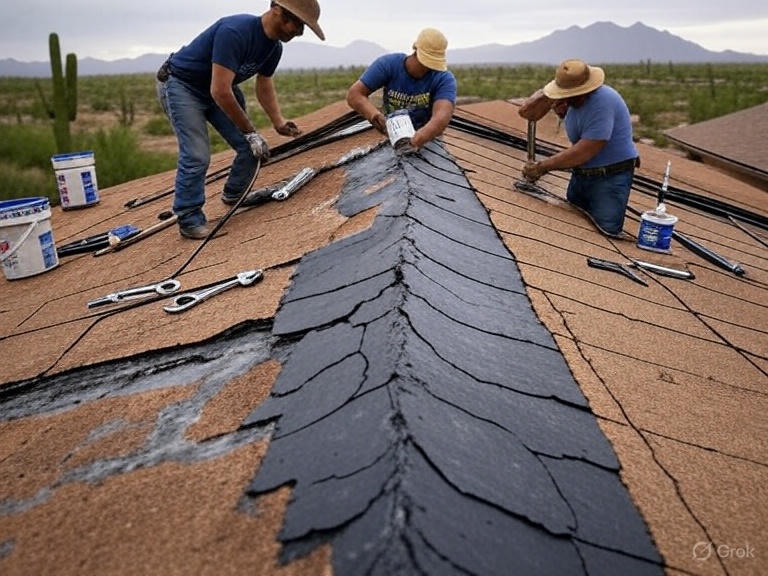
Roof flashing repair is essential for Arizona homeowners battling leaks from harsh desert conditions. Flashing and sealants protect vulnerable spots like chimneys and vents, but intense heat and monsoons can cause failures leading to costly damage. At Roof Geeks, we specialize in these fixes, ensuring your roof stays secure. Understanding the role of these components prevents small issues from becoming emergencies.
Flashing directs water away from roof joints, while sealants fill gaps to block moisture. In our climate, they face constant assault from UV rays and temperature swings. Without proper maintenance, leaks infiltrate, damaging interiors. We’ve seen this firsthand in countless homes across Maricopa and Tucson.
One Maricopa client called during a storm; failed flashing around their vent let water pour in, soaking the attic. We arrived quickly, sealing the area to stop the flow. Such stories highlight why flashing integrity matters in Arizona. Ignoring it risks structural harm and mold growth.
Proper flashing keeps your home dry year-round. For more on handling leaks, check our Roof Repair and Replacement services. We offer fast, reliable solutions tailored to desert roofs.
The Critical Role of Roof Flashing and Sealants in Arizona Homes
Roof flashing and sealants act as barriers against water entry. They cover transitions like valleys, edges, and penetrations. In Arizona, where rains are rare but intense, these elements prevent pooling and seepage. Without them, even minor storms cause major problems.
Heat expands materials, stressing seals over time. UV exposure fades and cracks sealants, reducing effectiveness. Flashing, often metal, corrodes if not maintained. Homeowners rely on these for protection, yet many overlook their importance until damage occurs.
A Tucson home we fixed had sealant failure around the chimney, leading to ceiling stains after a monsoon. The family was shocked at the speed of deterioration. We explained how desert sun accelerates wear, turning small gaps into leak paths. Education helps clients appreciate these components.
Strong flashing and sealants enhance roof longevity. They also improve energy efficiency by keeping attics dry. For broader emergency help, visit our Roof Repair Services. We’re experts in keeping Arizona roofs resilient.
Common Causes of Flashing and Sealant Failures in Desert Climates
Extreme heat is a top cause of flashing and sealant failures. Temperatures over 100 degrees warp metal flashing, creating gaps. Sealants dry out and crack under constant sun.
Improper installation leads to early breakdowns. If flashing isn’t overlapped correctly, water sneaks in. Sealants applied thinly fail quickly in our dry air. Monsoon water then exploits these weaknesses, causing erosion and leaks.
UV degradation breaks down materials molecule by molecule. Wind-driven debris abrades surfaces, worsening damage. One roof we saw had flashing lifted by high winds, sealants peeled like old paint.
Aging roofs compound problems, as materials lose flexibility. To combat this, regular checks are key. Link to our Roof Maintenance for plans that catch failures early. Prevention saves time and money in the long run.
Signs of Flashing and Sealant Problems Homeowners Should Watch For
Water stains on ceilings signal flashing or sealant issues. These brown marks appear after rains, indicating leaks at penetrations. Check attics for dampness or mold smells. Early spots prevent bigger repairs.
Rust or corrosion on visible flashing means trouble. Metal oxidizes in humid conditions post-storm. Cracks in sealants around vents are telltale. Pooling water near roof edges suggests poor drainage from failed seals.
Interior drips during monsoons scream for attention. Ever noticed a drip after a storm? That’s your roof crying for help! In Tucson inspections, we’ve found hidden rust leading to rot. Loose flashing rattles in wind, another red flag.
Monitor for increased energy bills from poor insulation. Debris buildup around penetrations hints at gaps. For expert eyes, our drone tech spots these fast. Learn more on our About Us page. We’re committed to thorough assessments.
Effective Repair Techniques for Flashing and Sealant Failures
Repair starts with inspection to identify damage extent. Remove old, failed materials carefully. Clean surfaces for better adhesion. Use heat-resistant sealants suited for Arizona.
Replace bent or rusted flashing with durable metal. Overlap pieces properly to direct water away. Apply sealant generously around joints. Test with water to ensure no leaks remain.
Think of flashing as your roof’s armor; if dented, we forge it anew. Proper drainage additions prevent pooling. Our methods focus on longevity.
Preventing Future Failures with Professional Maintenance and Education
Annual inspections catch issues before they worsen. Clean debris from valleys and penetrations regularly. Reapply sealants every few years in our climate. Educate yourself on signs to watch.
Maintenance plans include drone surveys for accuracy. Trim trees to avoid branch damage. Bird-proofing stops nesting that erodes seals.
Schedule timely minor fixes to avoid majors. Use quality materials from the start. Our education focuses on empowerment. Let’s keep your roof strong together!
Ready for a check? Visit our Contact page to schedule. We’re here for consultations across Arizona.
In summary, roof flashing repair tackles a key vulnerability in desert homes. From causes like heat to signs like stains, addressing failures promptly protects your investment. Effective techniques and maintenance ensure durability. At Roof Geeks, we deliver expert fixes with confidence.
We’ve covered the role, causes, signs, repairs, and prevention. Our services span Maricopa, Chandler, and Tucson. For new setups, see Roof Installation.