

Living in Arizona means enjoying endless sunshine, but it also means dealing with a roof that takes a beating from intense heat and sudden monsoons. Structural roof damage signs can sneak up on you, threatening your home’s safety and your peace of mind. As a third-generation roofer, I’ve seen how ignoring these signs leads to costly repairs. Let’s dive into what structural roof damage really means and why it’s crucial to spot it early in our desert environment.
Structural roof damage refers to problems that affect the core framework of your roof, like beams, trusses, or decking. These issues go beyond surface wear—they compromise the entire structure. If left unchecked, they can lead to collapses or major leaks, putting your family at risk. In Arizona, extreme temperatures cause materials to expand and contract, weakening supports over time. Monsoon storms add wind and heavy rain, stressing roofs further. Have you ever wondered why your roof seems fine one day and problematic the next? It’s often the desert’s harsh swings at play.
From my experience serving Maricopa, Chandler, and Tucson, I’ve encountered roofs sagging after prolonged UV exposure. One Tucson home had trusses warped from years of heat, turning a minor issue into a full rebuild. Structural damage isn’t just about aesthetics; it’s about safety. Spotting Arizona roof damage early saves money and headaches. Roof structure issues in desert climates build slowly but hit hard during storms. That’s why regular checks are key.
At Roof Geeks, we emphasize education because informed homeowners make smarter decisions. Imagine your roof as the backbone of your home—if it’s weak, everything suffers. We’ve helped countless families avoid disasters by addressing these signs promptly. For professional help, check out our Roof Repair Services.
What is Structural Roof Damage and Why It Matters in Arizona
Structural roof damage isn’t just a crack or a loose tile; it’s damage to the supporting elements that hold your roof together. Think beams cracking under pressure or trusses shifting from weight. This type of damage undermines your home’s integrity, potentially leading to unsafe conditions. In Arizona, where temperatures soar above 100 degrees, materials degrade faster. UV rays break down wood and metal, while monsoons bring flash floods that erode foundations.
Why does this matter so much here? Our desert climate accelerates wear. Heat causes expansion, creating stress points. Then, a sudden storm hits, and weak spots give way. I’ve seen homes in Chandler where ignored damage led to interior collapses during heavy rains. It’s heartbreaking, but preventable. Structural roof damage signs often appear after these weather events, signaling deeper problems.
Drawing from decades in the business, real-life examples abound. In Maricopa, prolonged sun exposure warped decking on a flat roof, causing sagging. Homeowners dismissed it as normal settling until leaks appeared. Have you noticed sagging in your roof line after a monsoon? That’s a red flag we’ve seen too often. It starts small but escalates quickly in our environment.
Emphasizing prevention, understanding these issues helps you act fast. Arizona roof damage isn’t forgiving—delays mean higher costs. Roof structure issues in desert climates demand vigilance. We’re here to guide you through it, ensuring your home stays strong.
Key Visual Signs of Structural Roof Damage to Watch For
Spotting visual signs early can make all the difference. One major indicator is a sagging roof line, where the roof dips instead of staying straight. This often points to weakened trusses or beams. In Arizona, after a monsoon, winds can push roofs to their limits, revealing these sags. Stand back and look—does your roof look wavy?
Cracked or warped beams are another telltale sign. Exposed in attics or under eaves, these show splits from heat stress. Warped decking creates uneven planes, making the roof look bumpy. Inside, bowing ceilings signal the same—pressure from above pushing down. These signs ramp up post-storm in our area.
Uneven roof planes disrupt the smooth surface, often from shifting supports. In Tucson, I’ve inspected homes where heat caused wood to twist, creating visible distortions. Visual roof damage indicators like these are your roof’s way of warning you.
A practical tip: After a storm, scan your roof from the ground. Does it look uneven? That’s a sign I’ve spotted countless times. Relating to desert life, it’s like how cacti bend under wind—roofs do too, but they shouldn’t. For ongoing care, explore our Roof Maintenance services to keep minor issues from growing.
Hidden Symptoms and Secondary Effects of Structural Damage
Not all damage shouts for attention; some whispers through hidden symptoms. Persistent leaks are a big one—water seeping in despite patches often means structural shifts allowing entry. In Arizona’s humidity swings during monsoons, this worsens fast. Mold growth follows, thriving in damp spots from compromised roofs.
Cracking walls or doors that stick indicate settling caused by roof issues. These secondary effects spread, affecting your home’s foundation. Roof leaks structural issues start small but cascade. In the desert, heat dries out seals, then rain exploits them, leading to mold from roof damage Arizona sees yearly.
Less obvious are energy bill spikes from poor insulation due to damage. Air escapes through gaps, forcing AC to work harder. I’ve reflected on projects where a Chandler leak was actually a truss shift. Don’t ignore small drips—they’re often a cry for help from your roof.
Balancing tech talk with simplicity, think of your roof as a shield. When hidden structural roof damage weakens it, threats sneak in. We’ve uncovered these in thorough checks, saving homes from bigger woes. Learn more about our approach on our About Us page.
Using Drone Inspections to Accurately Diagnose Structural Issues
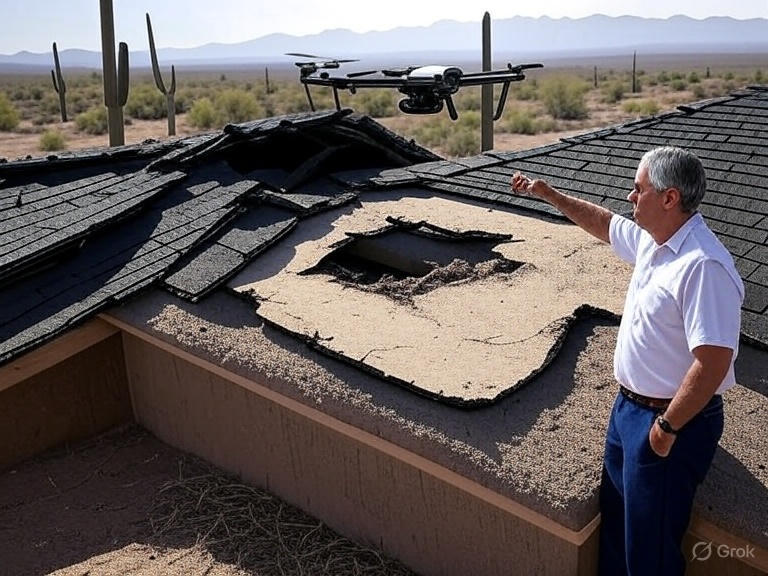
Professional inspections are vital, especially with drone technology. Drones fly safely over roofs, capturing high-res images of hard-to-reach spots. This avoids risking further damage from walking on weak areas. In Arizona, where roofs get scorching hot, drones keep inspectors safe while diagnosing accurately.
They spot subtle cracks in beams or shifts in trusses that eyes miss from the ground. High-res footage reveals patterns of wear from UV or storm impacts. Drone roof inspection structural damage has changed the game for us. Professional roof damage assessment Arizona benefits greatly from this tech.
At Roof Geeks, our drones are like eyes in the sky. They’ve revolutionized spotting issues—ever wondered what’s hiding up there? We’ve got the answer. Building trust, we share footage with clients, explaining findings clearly. Structural roof diagnosis becomes precise and efficient.
Next Steps: What to Do If You Suspect Structural Roof Damage
Suspecting damage? First, avoid DIY fixes—they can worsen things. Document issues with photos for insurance claims. Then, contact a trusted expert promptly. In Arizona’s climate, delays invite more harm from heat or storms. What to do structural roof damage starts with professional eyes.
Emergency roof repair Arizona often stems from ignored signs. Don’t wait for a collapse; act now to contain costs. Structural roof damage next steps include scheduling an inspection. We’ve guided many through this, turning worry into relief.
Worried about your roof’s structure? I’ve been there with clients across Arizona—let’s tackle it together before a small sag becomes a big problem. With empathy, we prioritize your safety and home’s longevity. Reach out via our Contact page for an urgent consultation.
Remember, early action preserves your roof’s life. In the desert, where weather tests limits, proactive steps pay off. Trust Roof Geeks to restore strength and security. Your home deserves the best care.