

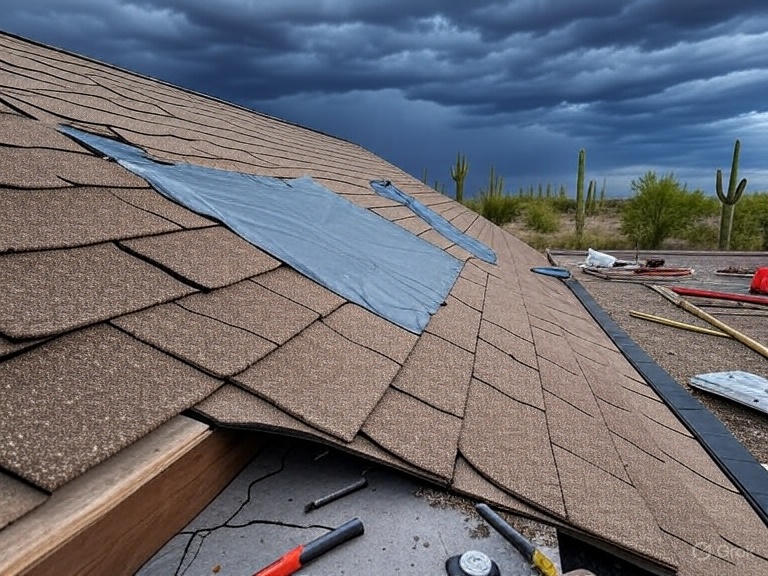
A temporary roof patch serves as a quick, essential fix for Arizona homeowners dealing with unexpected leaks or damage. In our desert climate, where intense heat cracks tiles and monsoons bring sudden downpours, these patches buy time to prevent water from ruining interiors. They’re not permanent, but they stop minor issues from escalating into major emergencies. At Roof Geeks, we’ve helped countless families across Maricopa, Chandler, and Tucson with these issues.
I recall a frantic call from a Maricopa homeowner last monsoon season. Their roof had a small crack from the summer heat, and heavy rain turned it into a steady drip over their kitchen. We applied a temporary roof patch on the spot, sealing the area with tape and sealant to hold until our crew could do a full repair. Stories like this show why understanding quick fixes matters in Arizona. It keeps homes safe while planning for lasting solutions.
Temporary patches involve covering damaged spots with materials like tarps or sealants. They’re ideal for small-scale problems but require professional follow-up. Ignoring this can lead to bigger costs down the line.
For more on our comprehensive services, check out Roof Repair Services. We handle everything from emergencies to installations.
When to Use a Temporary Roof Patch
Knowing when to apply a temporary roof patch can save your home from extensive damage. Use one for small leaks spotted after a storm, cracked tiles from heat expansion, or minor shingle loss due to wind. These situations often arise suddenly in Arizona, where weather shifts from scorching dry to pouring wet in hours. It’s a bridge to professional help, not a replacement.
In Chandler, I’ve seen homeowners patch up after monsoons to avoid immediate water damage. One client noticed a drip during a late-night storm and used a tarp to cover the area temporarily. It held for a few days until we arrived. But remember, if the leak is large or structural, skip the patch and call pros right away. Have you checked your roof after recent rains?
Patches work best on flat or low-slope roofs common in our state. They prevent pooling water from seeping in. Always assess safety first—steep roofs can be dangerous for DIY.
Build trust with our team; learn more on our About Us page. We’re committed to honest advice for Arizona roofs.
Materials and Methods for Effective Temporary Patching
For a temporary roof patch, gather simple materials like heavy-duty roofing tape, plastic sheeting or tarps, sealant, and nails or weights to secure them. Start by cleaning the damaged area of debris, then apply tape or sealant over cracks. Cover with a tarp if needed, fastening it tightly to withstand winds. In Arizona’s heat, work during cooler hours to avoid material melting or slips.
Think of it like bandaging a cut—it stops the bleed but needs stitches later. I’ve talked clients through this over the phone, emphasizing ladder safety. For tiles, use cement or adhesive; for shingles, tape works well. Avoid climbing if unsure; falls are a real risk here.
Steps include locating the leak source, often from inside via attic stains. Dry the area if wet, apply patch material generously. Test by pouring water nearby to check seal. These methods hold for days or weeks, depending on weather.
Prevent such emergencies with regular care; visit our Roof Maintenance page for tips.
Limitations and Risks of Temporary Roof Patches
Temporary roof patches have clear limits—they’re short-term and can fail under pressure. In Arizona, UV rays degrade materials quickly, turning a patch into a weak spot. Incomplete seals might hide leaks, leading to mold, wood rot, or ceiling collapses over time. Monsoons can wash away hasty fixes, worsening damage.
I’ve witnessed patches hold for a week, only to give way in heavy rain, flooding attics. Why chance it when pros can inspect thoroughly?
Energy loss is another concern; poor patches let heat in, spiking bills. Structural integrity suffers if water penetrates further. Always monitor after patching for new signs.
Next Steps: Moving from Temporary to Permanent Solutions
After a temporary roof patch, plan for permanent repairs promptly. Schedule a professional inspection to uncover root causes, like faulty flashings or aged coatings. In Arizona, quick action prevents minor fixes from becoming full replacements. We recommend drone assessments for accuracy without roof walking.
A Tucson family we helped patched their leak after a storm, but it failed soon after. We stepped in, replacing damaged sections and sealing properly. Now their home stands strong. Ready to secure yours? Transitioning builds long-term protection.
Discuss options with experts—tile replacement, shingle upgrades, or coatings for UV defense. Budget for it; early fixes save money. Educate yourself on signs to watch.
Contact us for a consultation; head to our Contact page to get started.